Modular retrofit path
Robot and dedicated-machine modules can be selected around retained dryers, trolley circulation and packaging equipment instead of requiring every plant to use one fixed layout.
Sinyoung configures automatic TSR 10/20 rubber bale handling and packaging lines for the process after drying. Depending on the project, the line can connect bale unloading, conveying, weighing or feeding, automatic baling, film wrapping, inspection, bale turning, and robotic palletizing or box loading. The automation scope is matched to the existing dryer, bale specification, target cycle, plant layout, and manual-handling reduction target.
At a glance
This line starts after natural-rubber drying and connects the selected unloading, conveying, feeding, baling, inspection, wrapping, turning and palletizing modules. It can be engineered as a complete automatic line or as a staged retrofit after the existing dryer, trolley system, controls and available space are surveyed.
These design features explain how the equipment supports service life, maintainability, process stability, safety or integration. Final performance remains subject to the confirmed material and project conditions.
Robot and dedicated-machine modules can be selected around retained dryers, trolley circulation and packaging equipment instead of requiring every plant to use one fixed layout.
Dryer discharge, feeding, pressing, inspection, wrapping and palletizing exchange ready, busy, fault and buffer states so that one fast motion does not hide a downstream bottleneck.
Weight checking, metal detection, internal inspection assistance, bale turning and traceable identification can be integrated with the packaging route defined for the project.
Automatic unloading, feeding and palletizing reduce repeated high-load manual handling while guarding, interlocks and recovery access are engineered for the actual cell.
Selection checklist
Technical reading
Model references clarify the machine series and inquiry scope. Final quantity, specification, and combination are confirmed from feedstock, output, utilities, site layout, packaging requirements, and the engineered process boundary.
| Process / application | Standard equipment name | Model |
|---|---|---|
| Automatic packing | Bale Unloading Robot | BUR-6-250 |
| Automatic packing | Bale Unloading Machine | BUM-6 |
| Automatic packing | Trolley Separator | TRS-6 |
| Automatic packing | Automatic Trolley Transfer Car | ATT-3 |
| Natural-rubber automatic packing | Automatic Feeding Single-Chamber Baling Press | SPR-180A |
| Natural-rubber automatic packing | Automatic Feeding Dual-Chamber Baling Press | DPR-180A |
| Automatic packing | Rubber Bale Internal Inspection Machine | IIM-10 |
| Automatic packing | Bale Invertor | BI-180 |
| Automatic packing | Metal Detector | APEX100-400/300 |
| Automatic packing | Automatic Wrapping Machine | AWM-10 |
| Automatic packing | Automatic Bagging Machine | ABM-10 |
| Automatic packing | Belt Weigher | BW-100 |
| Automatic packing | Palletizing Robot | PLR-6-180/2700 |
| Automatic packing | Stretch Wrapping Machine | SWM-200 |
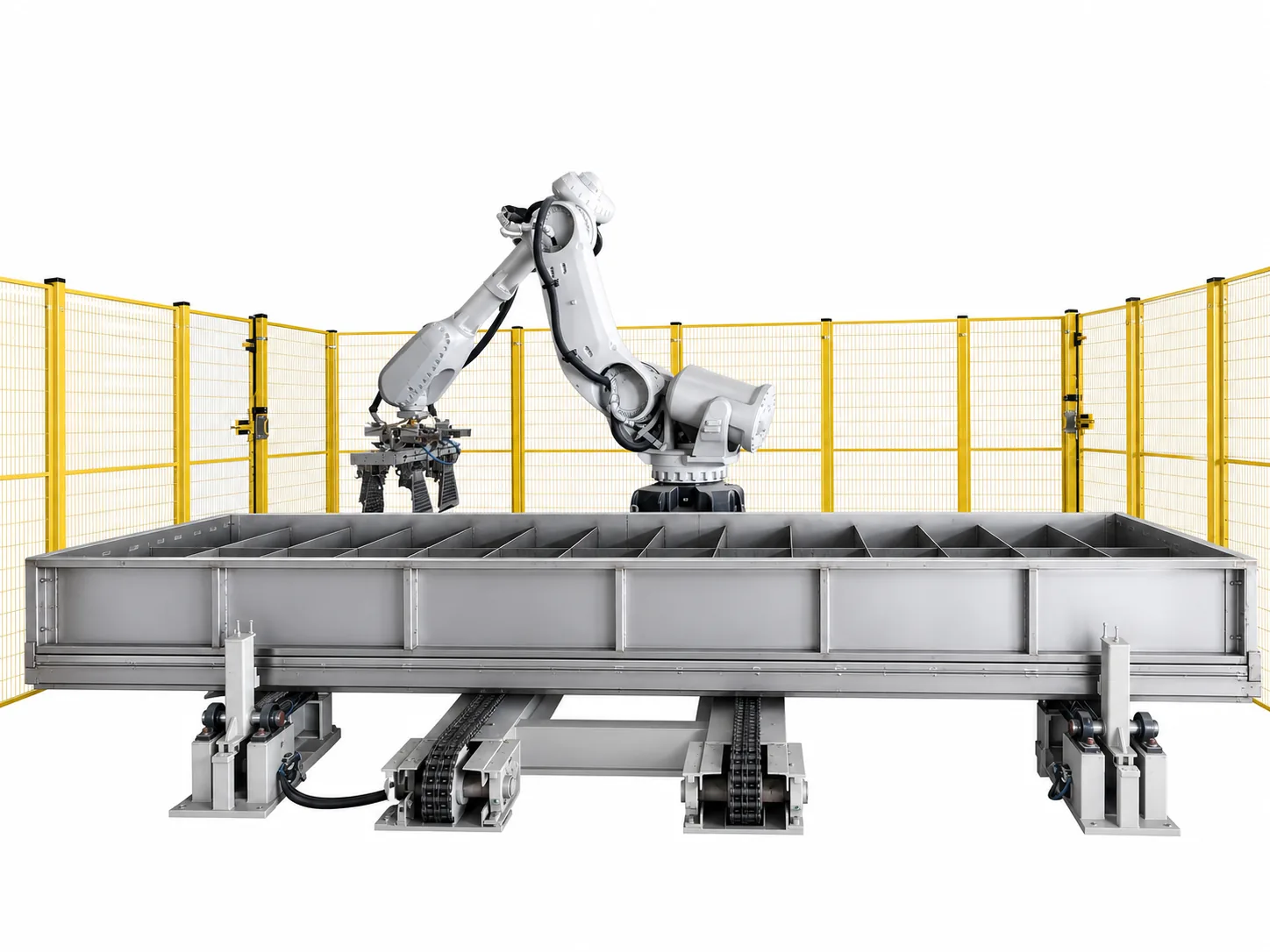
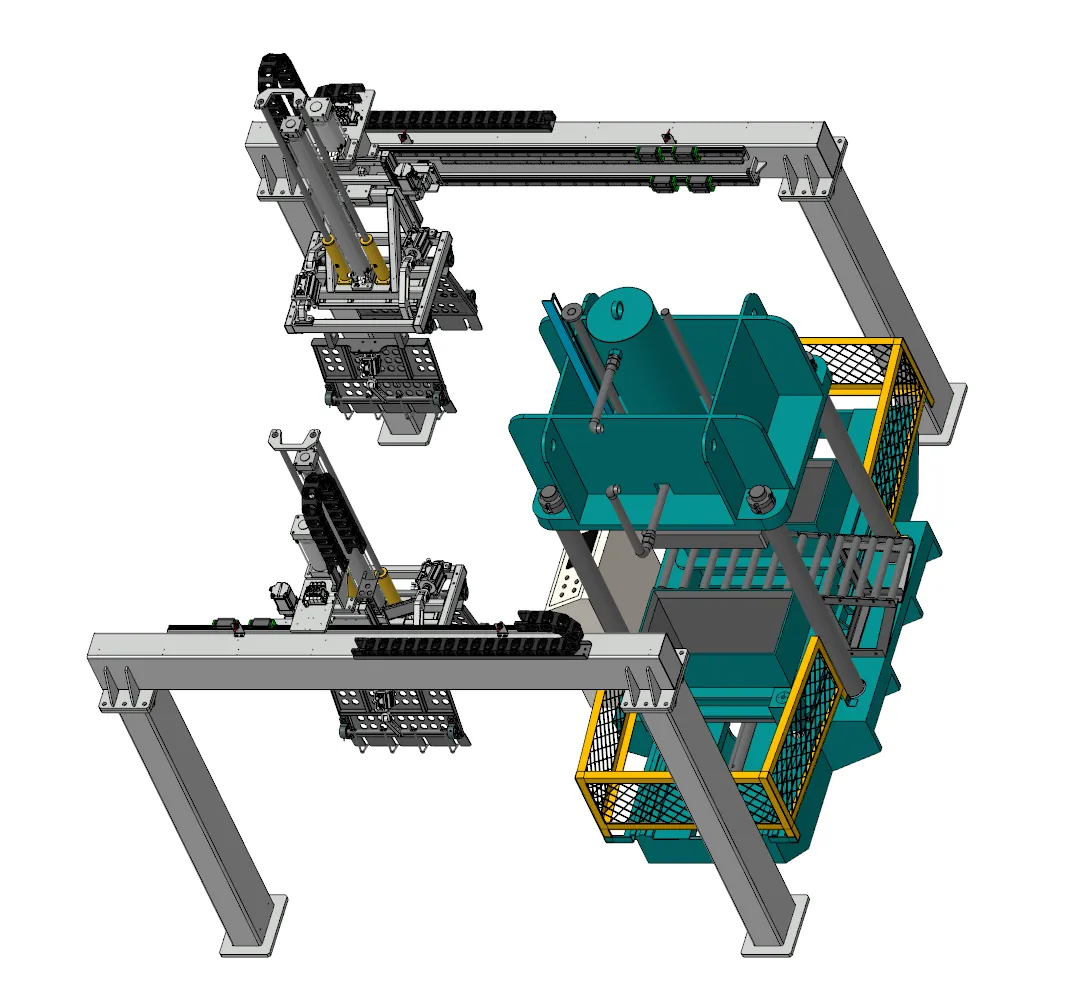
An industrial robot with a purpose-built gripper removes dried rubber blocks from individual trolley compartments after the trolley leaves the drying chamber.
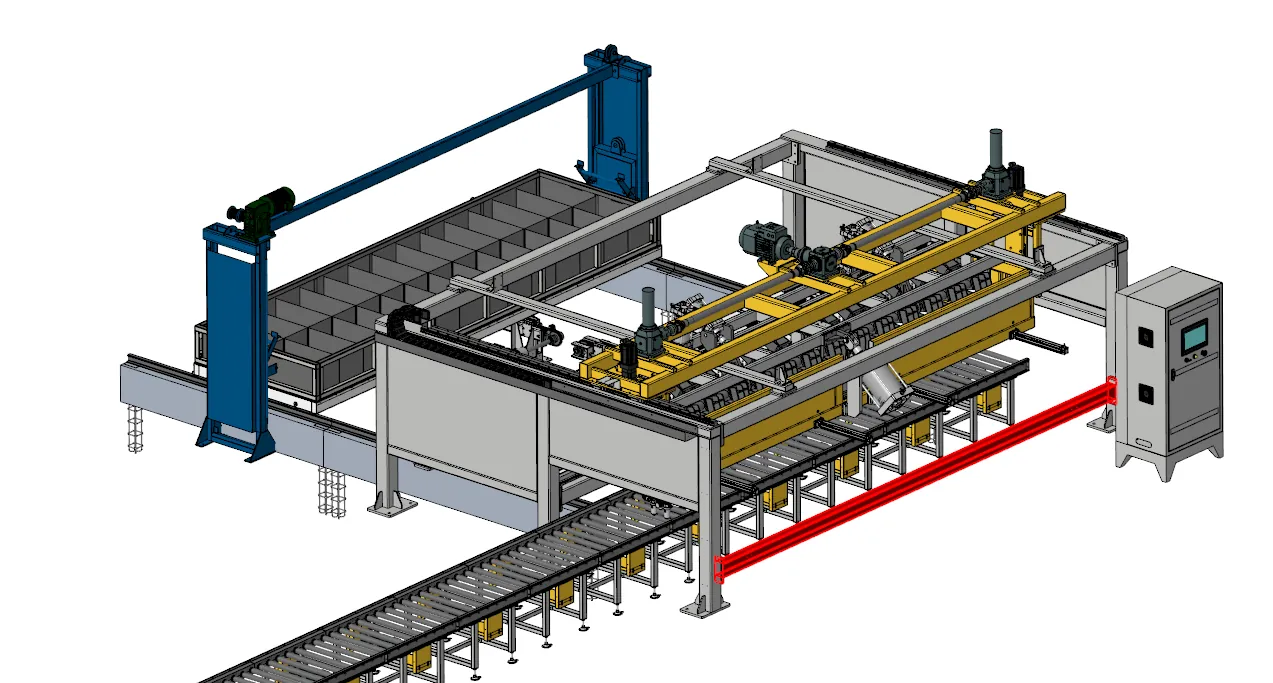
After the trolley frames are separated, the machine hooks dried rubber blocks from the lower frame in batches and transfers them to the conveyor.
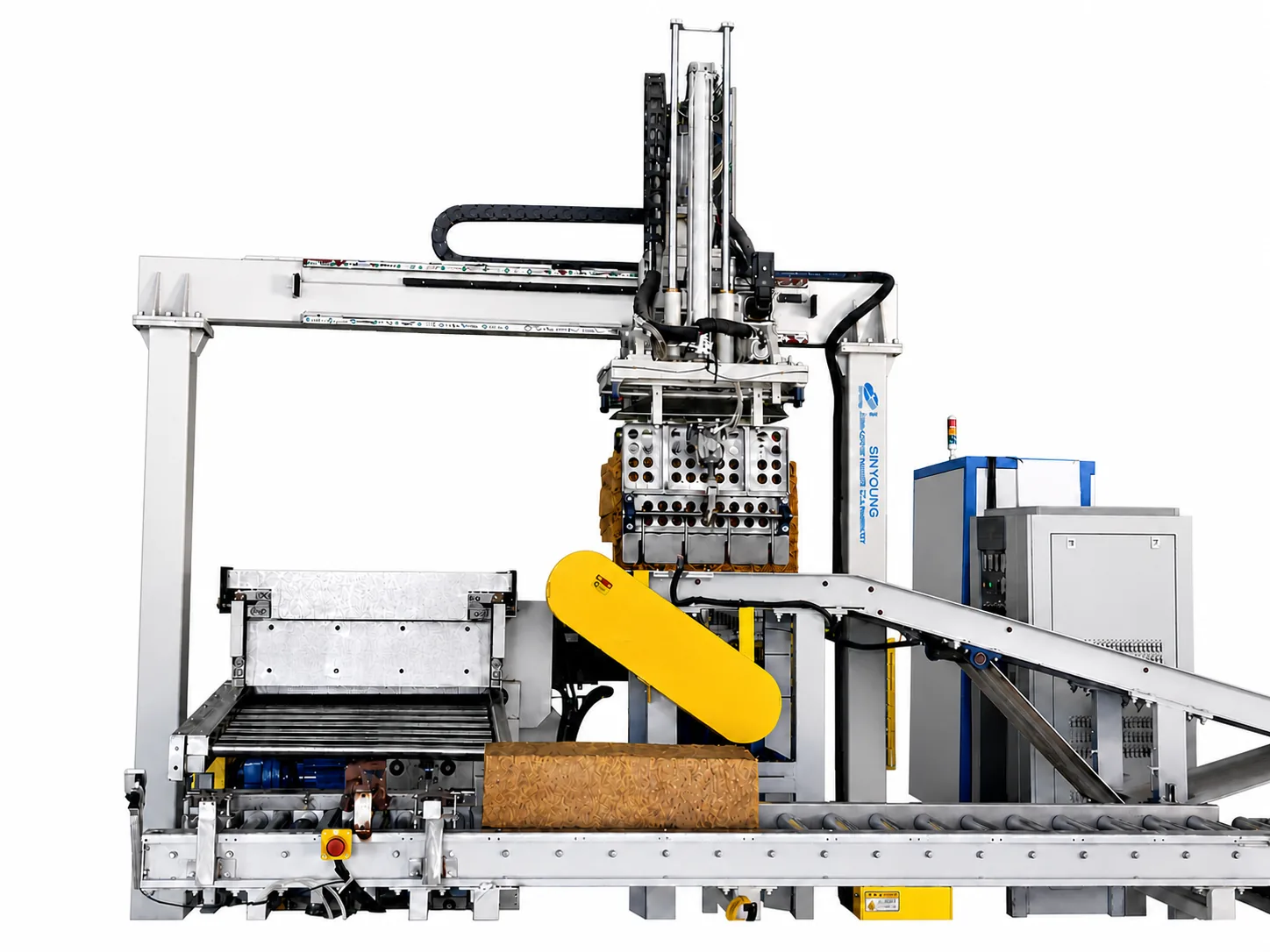
Automatically loads natural-rubber blocks into a single chamber and compresses them into bales in a TSR automatic packing line.
Automatically loads natural-rubber blocks into two chambers and compresses them into bales in a TSR automatic packing line.
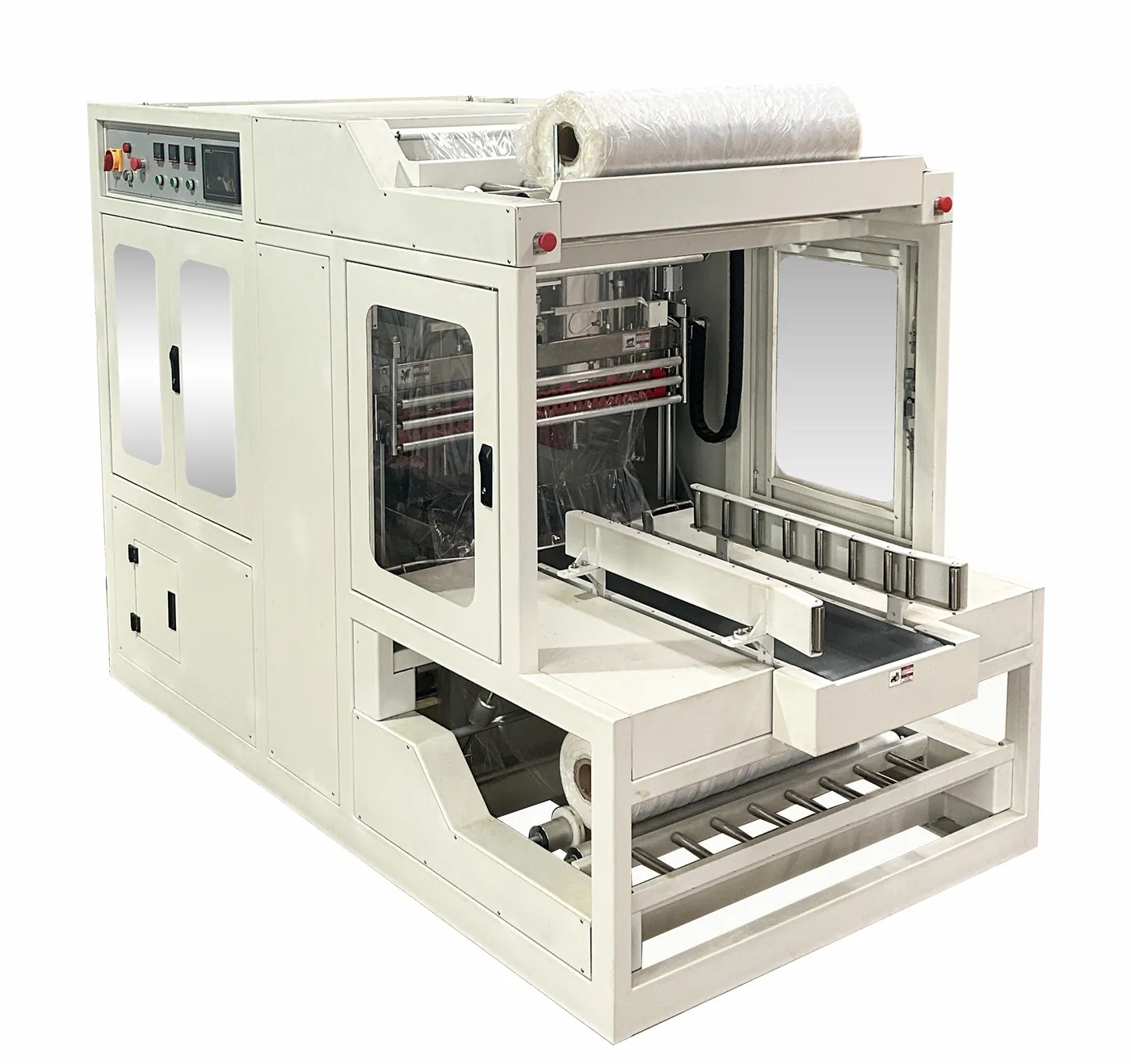
Automatically wraps rubber bales in LDPE film in the TSR packing section.
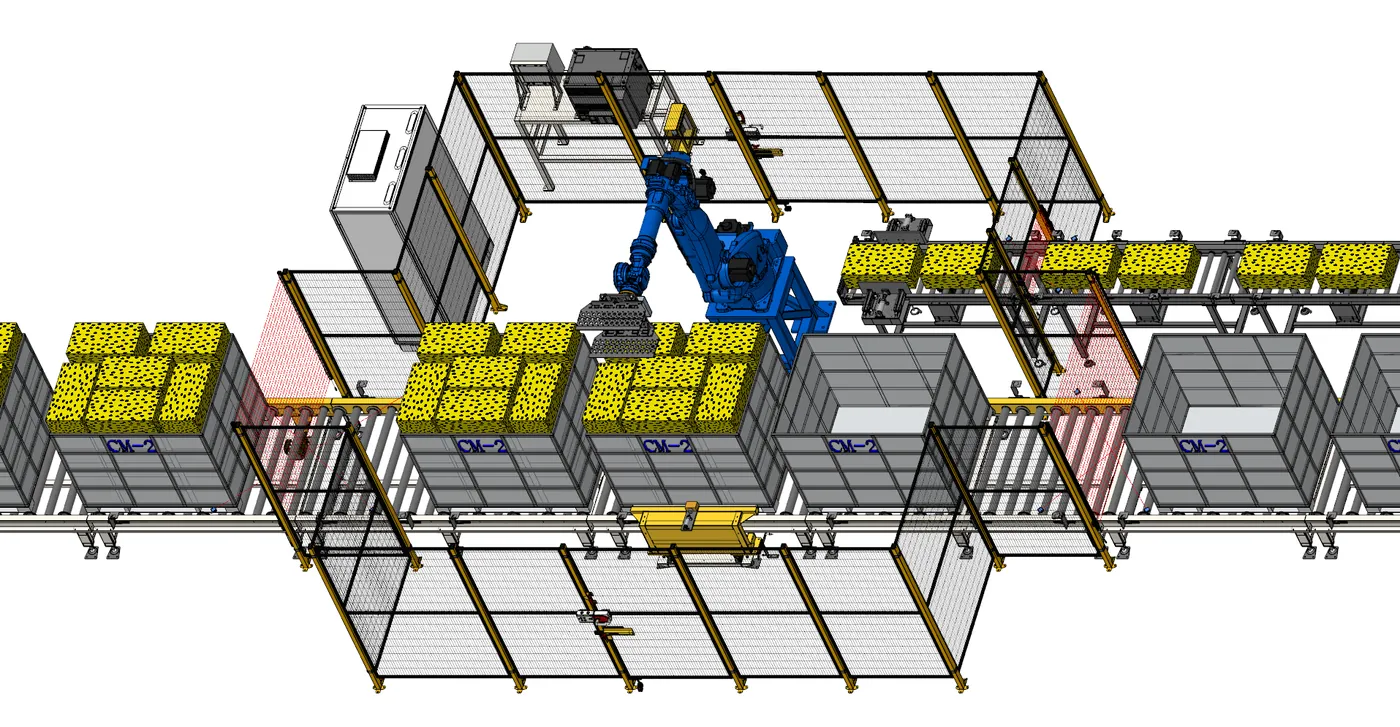
An industrial robot with a purpose-built gripper stacks wrapped rubber bales in a metal box or on a pallet according to the selected pattern.
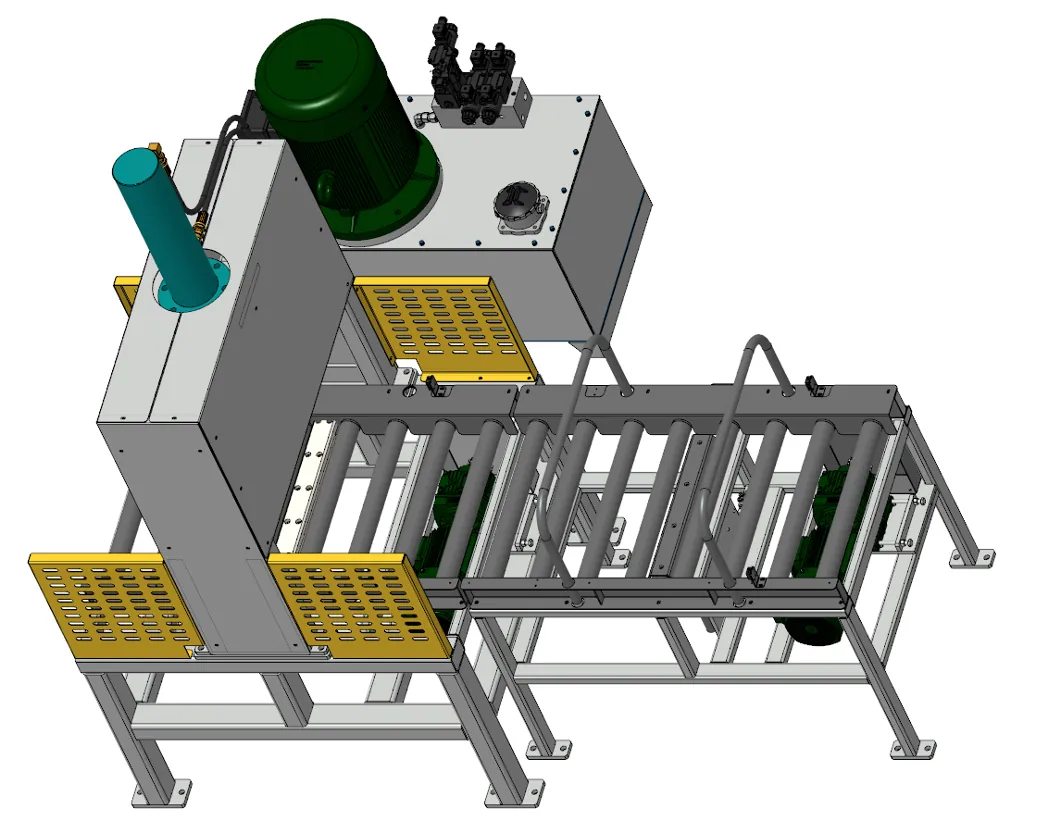
Cuts and opens rubber bales for manual inspection of internal agglomeration, under-drying, or similar quality defects.
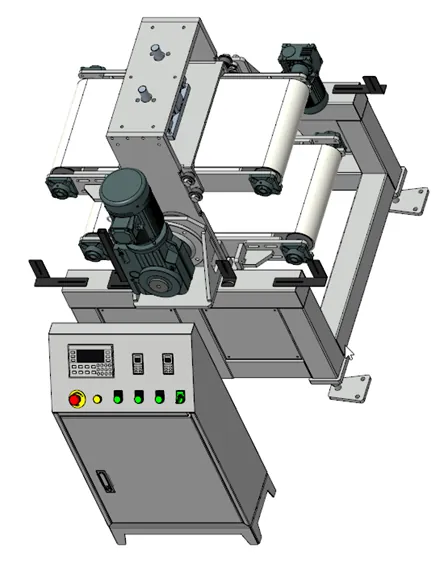
Turns each bale through 180° to expose its underside for visual inspection.
This system begins at the interface after drying. Depending on the selected modules, the material flow is: dryer or trolley discharge → bale unloading → conveying and centering → feeding or weighing → hydraulic baling → internal or metal inspection → film wrapping or bagging → bale turning → palletizing or large-box loading. Upstream wet processing and drying belong to the complete TSR production line. The TSR 10/20 process guide explains where post-drying bale handling begins.
A project may use a complete automatic line or selected modules for an existing plant. Final cycle time and operator requirement depend on the rubber condition, dryer discharge method, bale weight tolerance, packaging material, inspection requirements, and downstream pallet or box format. The system can be engineered around an existing dryer after its discharge, trolley circulation, controls, and available space are surveyed.
KIMS Rubber Cambodia documents an automatic bale unloading and packaging line coordinated with two TSR lines. Hainan Rubber Jinlian documents robotic unloading, automatic feeding, baling and packaging. PT Multi Kusuma Cemerlang documents robotic palletizing and large-box loading.
Yes. The dryer discharge, trolley circulation, available space, controls, bale condition, and required cycle must first be surveyed so that the new modules can be engineered around the existing plant.
Depending on the project, robots can unload rubber from drying trolleys, transfer rubber between process steps, feed the baling system, palletize finished bales, or load bales into large boxes.
Yes, when the gripper, downstream conveyor, pallet or box format, stacking pattern, and plant layout are engineered for the selected handling method.
The cycle is coordinated with dryer output, bale weight, feeding and pressing time, inspection, packaging material, downstream handling, and the planned operating schedule.
Provide the existing dryer and packaging layout, discharge method, bale specification, cycle data, available space, utilities, control interfaces, and the operations that should be automated.
Project inquiry
Share your feedstock, target output, finished-rubber specification, energy conditions, and required automation. Information sent through this form is delivered to our engineering sales team and handled under our Privacy Policy.
Prefer to write directly? [email protected]